Views: 169 Author: Site Editor Publish Time: 2025-09-13 Origin: Site
If you’ve ever heard a loud clicking sound when turning your car or noticed grease splattered around your wheel, chances are your CV joint is failing. Many drivers immediately wonder: Can I still drive with a bad CV joint? The short answer is yes—but only for a short time, and it’s not recommended. Driving with a bad CV joint can compromise safety, damage other components, and potentially leave you stranded. In this article, we’ll break down everything you need to know about driving with a failing CV joint, the risks involved, signs of damage, and how to handle the problem before it turns into a costly repair.
The CV joint, short for constant velocity joint, is a crucial part of your vehicle’s drivetrain. It connects the transmission to the wheels and allows them to move up and down with the suspension while still turning left and right. This flexibility ensures that your car can drive smoothly, even on uneven surfaces.
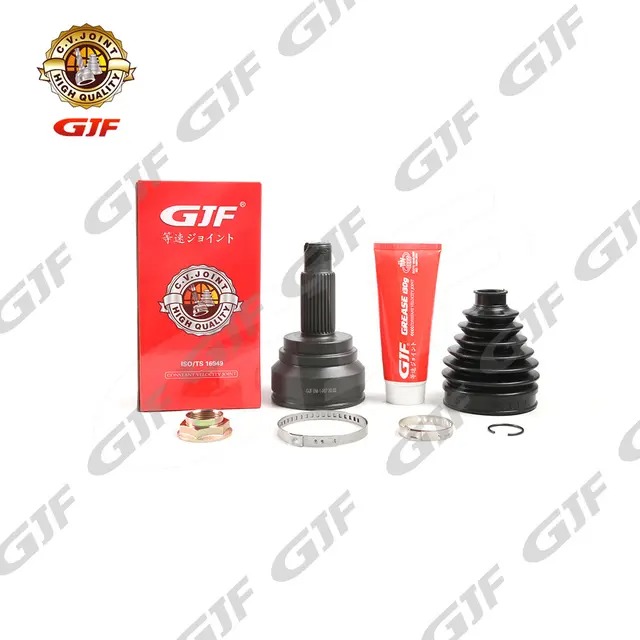
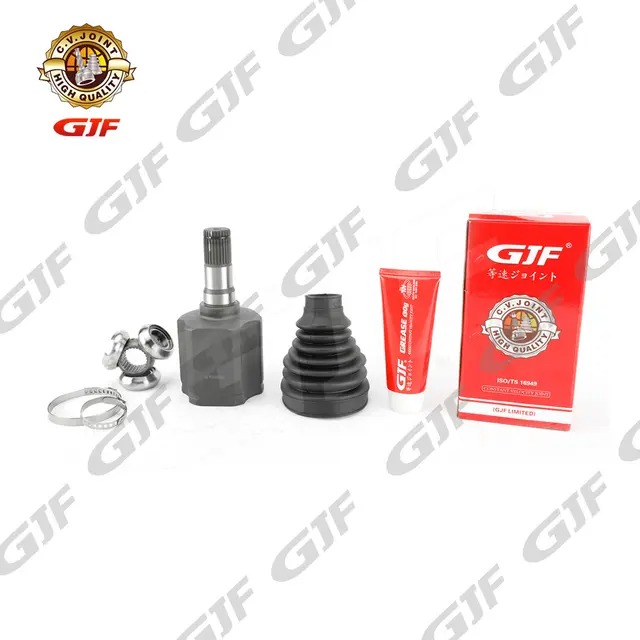
There are two main types of CV joints: outer CV joints, which connect to the wheels, and inner CV joints, which connect to the transmission. Together, they handle power transfer while allowing motion at different angles. Without properly working CV joints, your vehicle wouldn’t be able to maintain traction, especially when cornering.
| Type of CV Joint | Location | Main Function |
|---|---|---|
| Outer CV Joint | Wheel end | Maintains steering and power transfer while turning |
| Inner CV Joint | Transmission side | Manages up-and-down suspension movement |
Because CV joints endure constant stress and exposure, they are protected by CV boots filled with grease. When these boots crack or tear, dirt enters, grease leaks out, and the joint begins to wear rapidly.
Yes, it’s technically possible to drive with a bad CV joint—but doing so is risky. A worn CV joint may still transfer power, but it becomes weaker over time. If the joint fails completely, your car could lose the ability to move, leaving you stranded in the middle of the road.
Think of it this way: driving with a bad CV joint is like running on a twisted ankle. You might manage a few steps, but every move increases the chance of a complete breakdown. In most cases, you may get away with short, low-speed drives, but any long-distance or high-speed driving increases the danger significantly.
Driving with a failing CV joint isn’t just inconvenient—it can be dangerous. Here are the main risks:
Loss of Control: If an outer CV joint breaks, you may suddenly lose steering ability when cornering.
Total Breakdown: Once a CV joint fails completely, your car won’t move at all.
Damage to Other Components: A broken joint can damage axles, suspension parts, and even the transmission.
Safety Hazard: If the CV joint snaps at highway speeds, it can cause an accident by instantly disabling wheel power.
| Risk | Impact on Driving |
|---|---|
| Loss of Steering | Difficult or impossible to control the car |
| Complete Failure | Car won’t move at all |
| Secondary Damage | Higher repair costs |
| Accident Risk | Increased danger at higher speeds |
Simply put: while you can drive with a bad CV joint, you shouldn’t. The risks far outweigh the convenience.
Recognizing early signs of CV joint trouble can prevent a breakdown. The most common symptoms include:
Clicking Noise When Turning: A classic sign of an outer CV joint problem.
Grease on Tires or Rims: Caused by a torn CV boot leaking lubricant.
Vibration While Driving: A failing inner CV joint often causes shaking at higher speeds.
Knocking or Clunking Sounds: When accelerating or decelerating.
Not all noises come from the CV joint. For example, a bad wheel bearing may also cause vibrations, but it usually creates a humming sound rather than a clicking. Paying attention to when the noise occurs (turning, accelerating, or braking) can help pinpoint whether the CV joint is at fault.
There’s no exact mileage or timeframe because it depends on the extent of the damage. If the CV boot just started leaking, you might have a few weeks before serious damage occurs. But if the joint is already clicking loudly, failure could happen at any moment.
Minor Boot Damage: Possibly safe for a short period if repaired quickly.
Loud Clicking Noise: Joint is already damaged; avoid driving far.
Severe Vibration or Clunking: Immediate replacement is necessary.
The bottom line: the more pronounced the symptoms, the shorter the safe driving window. Waiting too long can turn a relatively affordable repair into a major expense.
One of the main reasons drivers risk driving with a bad CV joint is the repair cost. However, the expense varies depending on whether you replace just the CV joint, the CV boot, or the entire axle.
| Repair Type | Average Cost (Parts + Labor) |
|---|---|
| CV Boot Replacement | $150 – $300 |
| CV Joint Replacement | $400 – $800 |
| CV Axle Replacement | $500 – $1,200 |
Replacing the axle is often the recommended fix, since a worn CV joint usually damages the entire unit. While costly, it’s far cheaper than dealing with the aftermath of a total breakdown or collision caused by failure.
If you find yourself needing to drive temporarily with a failing CV joint, here are some safety tips:
Limit Driving Distance: Only use the car for essential short trips.
Avoid High Speeds: Driving faster increases stress on the joint.
Avoid Sharp Turns: Outer CV joints fail faster when steering hard.
Inspect Frequently: Check for worsening symptoms before each trip.
Schedule Repairs Quickly: Treat driving as a short-term solution, not a fix.
While these measures reduce immediate risk, they don’t eliminate it. The safest approach is to repair the CV joint as soon as possible.
Most CV joint problems start with a torn boot. Regular inspections and timely maintenance can extend their lifespan significantly. Here’s what you can do:
Check CV Boots Regularly: Look for cracks, splits, or grease leaks.
Schedule Preventive Maintenance: Have your mechanic check CV joints during oil changes or tire rotations.
Avoid Rough Driving: Hard acceleration, sudden turns, and off-road driving increase wear.
Use Quality Replacement Parts: Inferior parts wear out faster, leading to recurring issues.
Catching problems early means you can replace just the boot instead of the entire joint or axle.
A failing CV joint puts your safety, your vehicle, and your wallet at risk. At best, you’ll end up with a breakdown; at worst, you could lose control of your car. If you notice symptoms like clicking noises, grease leaks, or vibrations, schedule a repair immediately. Replacing a CV joint or axle may seem expensive, but it’s far cheaper—and safer—than the consequences of ignoring the problem.
1. How long will a CV joint last?
Most CV joints last 80,000–120,000 miles, depending on driving conditions and maintenance.
2. What happens if a CV joint breaks while driving?
If it completely fails, your car will lose power to the wheels and may stop moving altogether. In some cases, steering may also be affected.
3. Can I replace just the CV boot instead of the whole joint?
Yes, if the joint itself hasn’t worn yet. But once clicking noises start, replacing the entire joint or axle is usually necessary.
4. Is a bad CV joint dangerous?
Yes. Beyond risking a breakdown, it can cause sudden loss of control, especially at high speeds.
5. Should both CV joints be replaced at the same time?
Not always, but mechanics often recommend replacing both sides if one is worn, especially in high-mileage vehicles.


