About GJF
GJF adheres to the cooperation philosophy of "integrity, innovation, altruism, and win-win."We wholeheartedly serve and aim to achieve win-win situations in the future automotive aftermarket.
Get a free quote


News
18
Jun
What Is A CV Joint Boot And When Should It Be Replaced? - GJF
What Is a CV Joint Boot and When Should It Be Replaced? - GJF
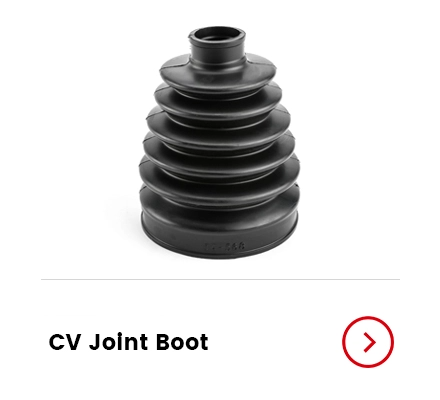
A CV joint boot, also known as a CV boot or CV axle boot, is an important protective component used on a vehicle's drive shaft. It covers the CV joint, keeps the grease inside, and prevents water, dirt, dust, and road debris from entering the joint.
Although the CV boot is a relatively small part, its condition can directly affect the service life of the CV joint. Once the boot cracks or tears, grease may leak out and contaminants can enter. If the problem is ignored, the CV joint may eventually become worn or damaged.
So, what does a CV joint boot do, and when should it be replaced?
What Is a CV Joint Boot?
A CV joint boot is a flexible protective cover fitted around a constant velocity joint.
Most drive shafts have an inner CV joint and an outer CV joint. The joints allow the drive shaft to transfer power while operating at changing angles as the vehicle moves and turns.
The CV boot creates a protective seal around the joint. It helps keep the special CV joint grease inside while keeping harmful contaminants outside.
Because the boot must flex continuously during driving, it needs to be flexible, durable, and correctly fitted to the CV joint and drive shaft.
What Does a CV Boot Do?
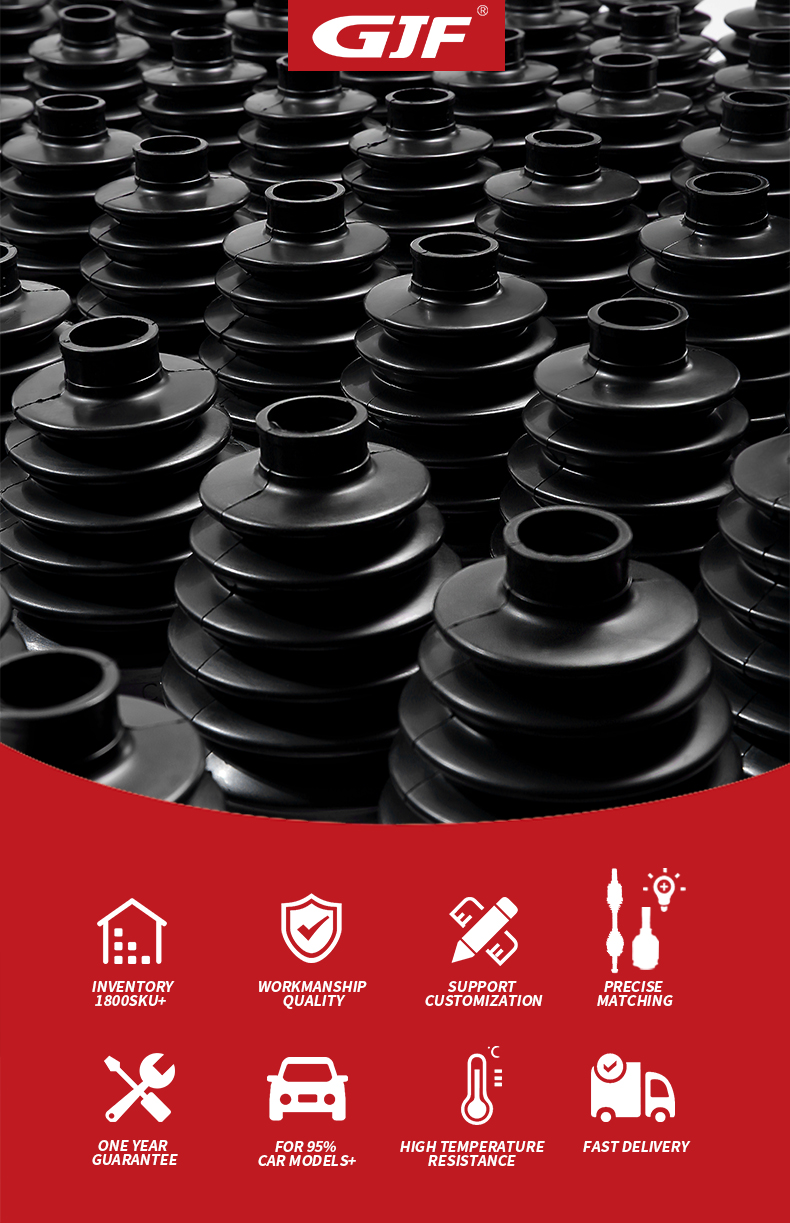
The main functions of a CV joint boot are:
- Keep CV joint grease inside
- Prevent water and dirt from entering
- Protect internal joint components
- Maintain proper lubrication
- Allow the CV joint to move normally
- Help extend CV joint service life
The CV joint operates close to the road, where it can be exposed to mud, water, dust, stones, and changing temperatures. A damaged boot can therefore create a direct path for contaminants to reach the joint.
A good CV boot is not simply a cover. It is an important part of the joint's protection system.
Signs of a Damaged CV Joint Boot
A damaged CV boot can often be identified during a visual inspection. Some common warning signs include the following.
1. Cracks or Tears
Small cracks may appear between the folds of the boot. Over time, repeated movement can make these cracks larger and eventually cause the boot to split.
A torn CV boot should not be ignored even if the vehicle still drives normally.
2. Grease Leakage
Grease around the CV boot, drive shaft, suspension components, or inside of the wheel can indicate that the boot is leaking.
When the axle rotates, grease can be thrown outward through a damaged section of the boot.
Grease leakage is one of the most important signs that the CV boot and joint should be inspected.
3. Damaged or Loose Clamps
CV boots are secured with clamps at both ends. If a clamp becomes loose or damaged, the boot may lose its seal.
A technician should check both the boot and clamps rather than replacing only the clamp without finding the cause of the problem.
4. Clicking or Popping Noise
A clicking or popping sound, especially when turning, can indicate a worn outer CV joint.
This does not necessarily mean that the boot itself is making the noise. In many cases, the joint may have become worn after operating for some time with a damaged boot.
5. Vibration or Abnormal Noise
Vibration, clunking, or unusual drivetrain noise can also be related to CV joint or drive shaft problems.
Because these symptoms can have different causes, the complete drive shaft system should be inspected before deciding which component needs replacement.
When Should a CV Joint Boot Be Replaced?
There is no fixed mileage interval for every CV boot. Replacement depends on the vehicle, driving conditions, boot material, installation quality, and the condition of the part.
A CV boot should generally be replaced when:
- The boot is torn or punctured
- Deep cracks are visible
- Grease is leaking
- The boot has become excessively hard or damaged
- The boot is deformed
- The sealing clamps are damaged
- The boot has been damaged during other repairs
Replacing a damaged boot early can help protect the CV joint from further contamination.
If the CV joint itself is still in good condition, replacing only the boot may be possible. However, the joint should be inspected before reusing it.
Can You Replace Only the CV Boot?
Yes, in some cases.
If the CV boot is damaged but the CV joint has not suffered significant wear, a CV boot replacement can be used instead of replacing the complete CV joint or drive shaft.
Before installing a new boot, the joint should be checked for:
- Excessive wear
- Damaged ball tracks
- Contamination
- Abnormal movement
- Damaged cage or other internal components
If the joint has already developed serious wear or abnormal noise, replacing only the boot will not repair the damaged joint.
This is why early inspection is important. A small boot problem can become a much larger drivetrain repair if it is left untreated.
How to Choose the Right CV Joint Boot
Choosing the correct CV boot is important for proper sealing and long-term performance.
Before ordering a replacement boot, check:
- Vehicle application
- Inner or outer CV joint position
- Boot length
- Mounting diameters
- CV joint design
- Boot material
- Clamp type
- OE or cross-reference number
A boot that is too large, too small, or incorrectly matched may not seal properly or may experience excessive stress during operation.
For automotive parts distributors and repair shops, application information and OE numbers are useful when confirming the correct CV boot.
CV Joint Boot Material Matters
CV boots are commonly produced from flexible rubber or thermoplastic materials.
The material needs to withstand repeated movement, temperature changes, grease exposure, and contact with road conditions.
A suitable boot should maintain its flexibility during normal operation without becoming brittle or cracking easily.
For this reason, selecting a CV boot only by its appearance is not recommended. Material, dimensions, application, and joint design should all be considered.
GJF CV Joint Boot Solutions
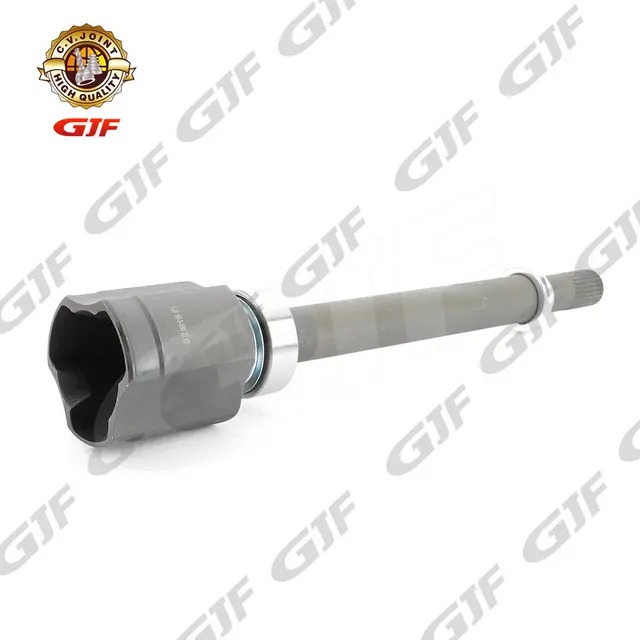
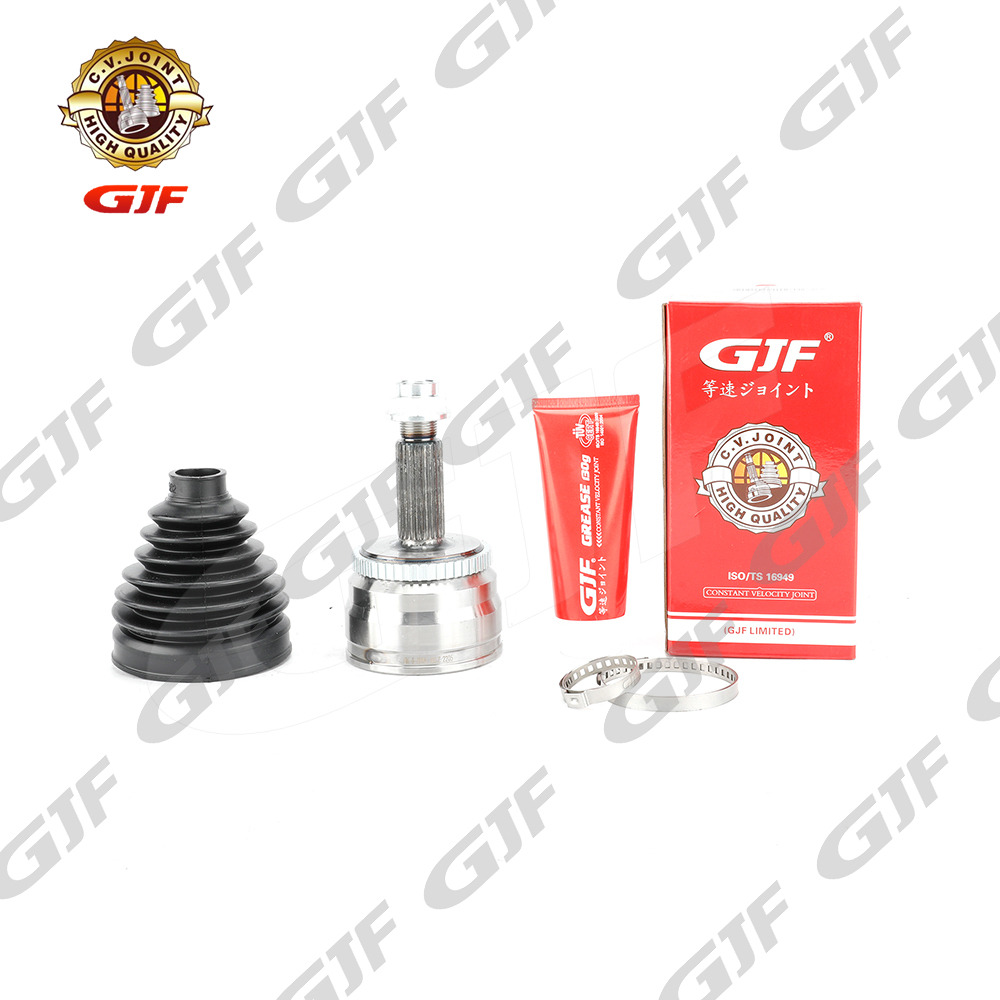
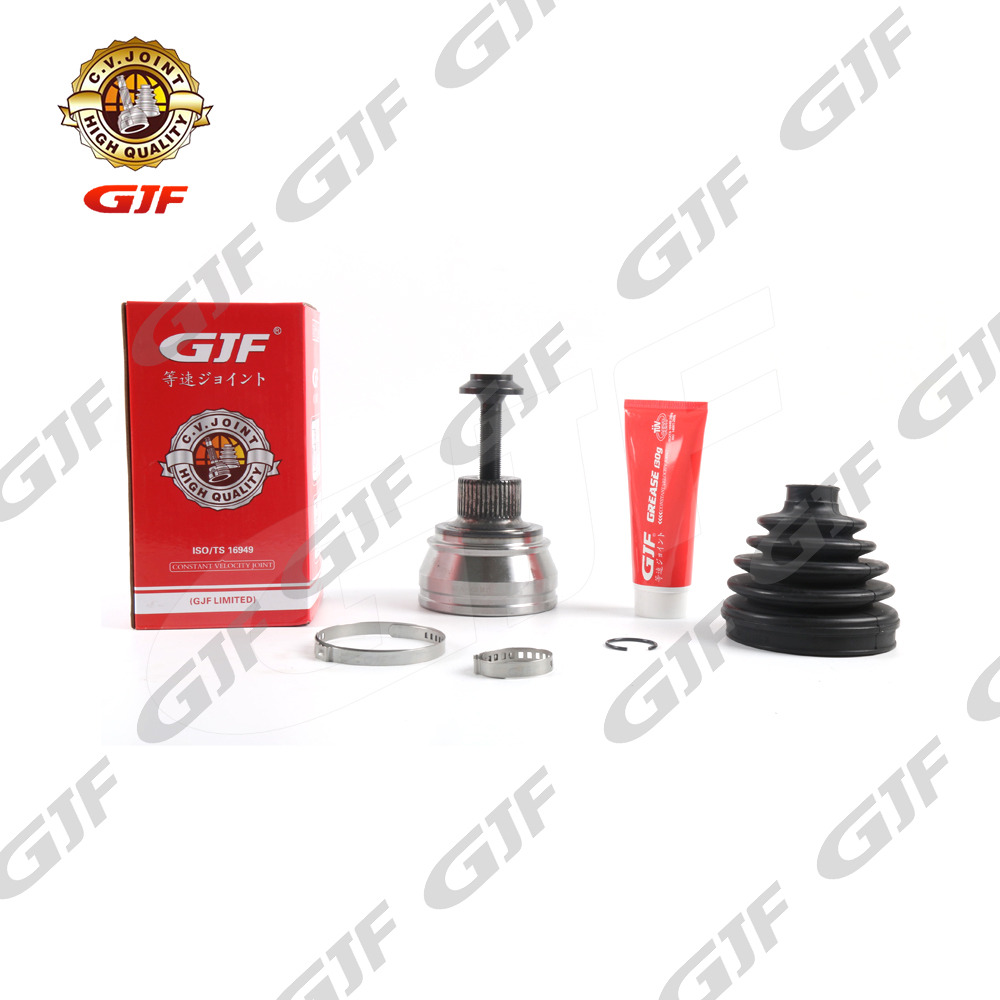
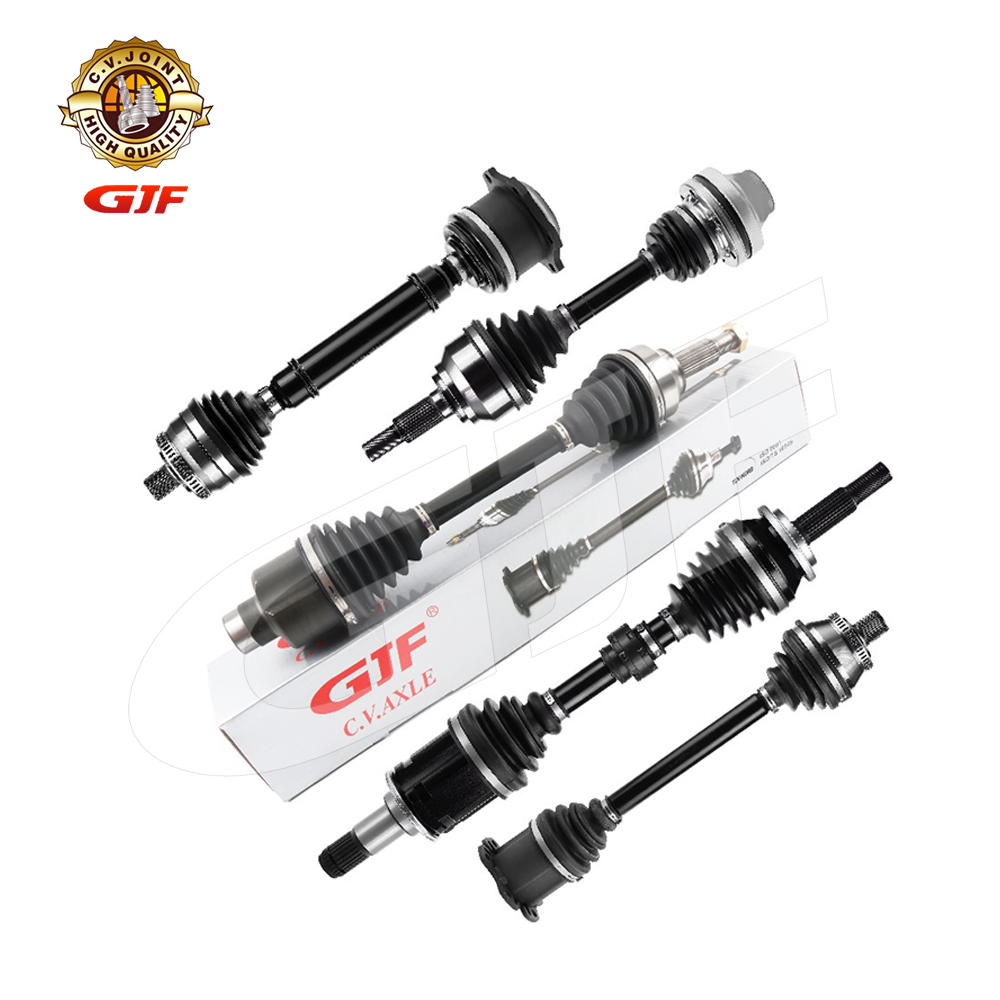
GJF Auto Parts provides drivetrain components for the automotive aftermarket, including:
- CV Joint
- Inner CV Joint
- Outer CV Joint
- CV Joint Boot
- Drive Shaft / CV Axle
- Intermediate Shaft
- Wheel Hub Bearing
- Related drivetrain components
GJF CV joint boots are developed for different vehicle applications and are designed to work with the corresponding CV joint and drive shaft system.
GJF also offers a broad range of drivetrain products, allowing wholesalers, distributors, repair shops, and automotive parts buyers to source related components from one supplier.
With extensive application coverage and a wide product range, GJF provides solutions for different aftermarket sourcing requirements.
Final Thoughts
A CV joint boot plays a simple but important role in protecting the CV joint.
When the boot remains sealed, it helps retain grease and keep contaminants away from the joint. When it cracks, tears, or leaks, the CV joint can gradually become contaminated and worn.
If a damaged CV boot is found early and the CV joint is still in good condition, replacing the boot may be enough. If the joint has already developed significant wear, a CV joint or complete drive shaft replacement may be required.
Regular inspection is therefore one of the easiest ways to prevent a small CV boot problem from becoming a larger drivetrain repair.
Looking for CV joint boots, CV joints, drive shafts, or other drivetrain parts? Contact GJF Auto Parts with your OE number, vehicle information, or product requirements.
Tags :
Recent Posts