Views: 0 Author: Site Editor Publish Time: 2026-03-02 Origin: Site
You hear a sharp clicking or popping noise during tight turns. This unmistakable sound almost always signals a failing outer CV joint. Many drivers face a tough financial choice at this exact moment. You can pay a massive premium for an OEM replacement at the dealership. Alternatively, you can risk your vehicle's reliability by installing a suspiciously cheap substitute. Neither extreme is ideal for a daily driver. You need a reliable solution balancing upfront cost and long-term durability. Our goal is to provide a technical, objective framework to help you navigate this decision. We will help you evaluate the best aftermarket outer CV joints based on material durability and machining precision. You will also learn how to match these vital drivetrain parts to your specific vehicle requirements. Understanding these mechanical factors prevents premature breakdowns. It also saves you from recurring labor costs down the road.
Replacing only the outer CV joint is often more cost-effective than replacing the entire axle assembly, provided the inner joint and shaft are intact.
Boot material (Silicone vs. Neoprene) and grease quality are the top predictors of an aftermarket joint's lifespan.
Fitment tolerances vary significantly by vehicle origin; a "one-size-fits-all" aftermarket approach often leads to vibration or premature failure.
Total Cost of Ownership (TCO) must factor in installation labor—saving $30 on a low-tier joint is negated if it fails within a year and requires a second installation.
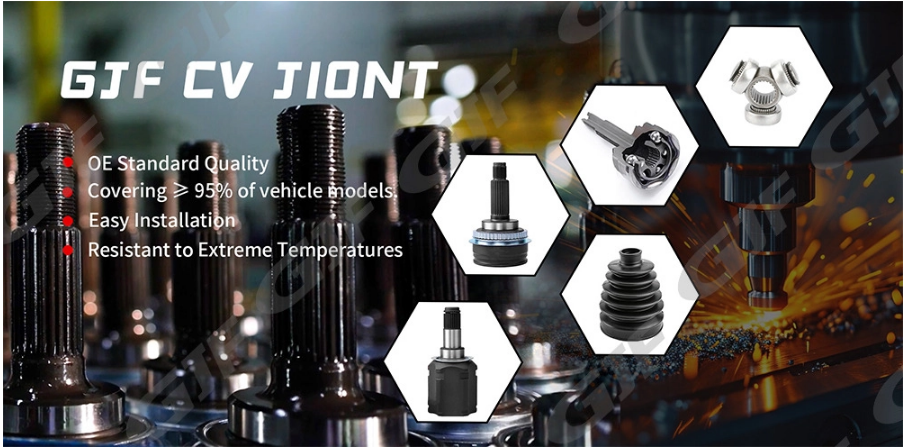
Dealership parts carry a significant price premium. This OEM markup makes sense for newer vehicles still under factory warranty. New cars demand exact factory specifications to maintain warranty coverage. However, the calculation changes for out-of-warranty, high-mileage vehicles. Spending top dollar on an OEM part rarely maximizes your return on investment here. A high-quality aftermarket component offers similar durability at a fraction of the cost. You must align the expected lifespan of the replacement part to the remaining lifespan of the car.
Mechanics often debate replacing the joint head versus swapping the entire half-shaft axle. Replacing just the joint head saves substantial money on parts. You get to keep your original, high-quality factory axle shaft. This approach requires more labor time. The technician must remove the old joint, clean the splines, and pack the new grease. Conversely, swapping the entire axle assembly is much faster. It reduces billable labor hours. However, cheap full-axle assemblies often utilize inferior inner joints. These budget inner joints frequently cause highway-speed vibrations. We recommend replacing just the outer component if your axle shaft remains straight and true.
Budget aftermarket joints hide massive downstream costs. Saving money upfront feels smart until the substandard spline shears under heavy load. A broken spline leaves you stranded on the highway. You then pay an expensive tow fee. You also pay a mechanic for a second installation. The total cost of a failed cheap part vastly exceeds the price of a premium aftermarket unit. Always factor recurring labor charges into your initial purchasing decision.
| Replacement Strategy | Initial Part Cost | Labor Required | Long-Term Reliability | Overall ROI |
|---|---|---|---|---|
| OEM Joint Replacement | Highest | Moderate | Excellent | Low (for older cars) |
| Premium Aftermarket Joint | Moderate | Moderate | High | Highest |
| Budget Aftermarket Joint | Lowest | Moderate | Very Low | Negative (due to failure) |
| Full Budget Axle Swap | Moderate | Low | Low (Inner joint risk) | Moderate to Low |
The protective boot defends the joint against water and debris. Manufacturers primarily use two materials for these boots. Neoprene serves as the industry standard. It provides decent oil resistance and performs adequately in moderate climates. High-performance silicone offers a major upgrade. Silicone delivers superior high-temperature and low-temperature flexibility. It also boasts exceptional tear resistance in harsh driving conditions. We highly recommend silicone boots for drivers facing severe winters or rugged terrain. A torn boot ruins a joint rapidly. Investing in superior boot material guarantees a longer component lifespan.
Rotational components demand exact engineering. A quality joint must feature OEM-matched spline counts. Micro-tolerances prevent frustrating highway-speed vibrations. Poorly machined splines leave tiny gaps between the shaft and the hub. These gaps cause the assembly to bind during aggressive suspension articulation. Binding forces lead to rapid mechanical wear. Exact machining ensures smooth power delivery and eliminates steering wheel shudder.
Extreme friction generates intense heat inside the ball-and-cage assembly. Standard chassis grease burns up and degrades quickly under these conditions. Manufacturers must utilize high-grade Molybdenum Disulfide grease. Mechanics simply call this Moly grease. Moly particles bond directly to the internal steel surfaces. They create a slippery, sacrificial boundary layer. This specialized formulation handles extreme friction effortlessly. It prevents metal-to-metal scoring during high-torque acceleration events.
Raw steel cannot withstand the constant stress of drivetrain rotation. Factories must employ induction-hardened steel housings. This targeted heat treatment strengthens the internal cage and the outer bell. It balances surface hardness against core toughness. Proper heat treatment prevents premature wear tracks from forming. It also stops the internal cage from fracturing under heavy loads. Always verify the hardening processes used by your chosen aftermarket brand.
Japanese automakers engineer highly refined drivetrains. Honda and Toyota platforms exhibit extreme sensitivity to aftermarket vibrations. You must maintain precise rotational balance to avoid issues. An unbalanced aftermarket joint causes severe steering wheel shake at highway speeds. The replacement geometry must match OEM specifications perfectly. A poorly balanced component ruins the driving experience entirely. We always advise prioritizing precision balancing when sourcing parts for these vehicles.
Tighter engineering tolerances define European and German drivetrains. You must ensure exact ABS ring fitment on the new joint. Missing this step triggers immediate dashboard error codes. These vehicles also frequently utilize specialized torque-to-yield axle nut threading. The internal materials must withstand higher torque outputs from turbocharged engines. High-performance European drivetrains easily destroy substandard cages. Sourcing heavy-duty materials remains critical for these specific applications.
Domestic trucks and large SUVs demand heavy-duty components. Many owners install aftermarket suspension lifts. Lifts fundamentally change the natural operating angle of the axle. You need high-articulation joints to accommodate these steeper angles. Standard joints bind and snap under lifted conditions. You also need thicker boot materials to resist trail debris. These heavy-duty joints accommodate severe towing strains and higher payload capacities. Upgrading your parts prevents sudden failures under heavy loads.
The Chinese domestic market (CDM) evolves at a blistering pace. Automakers iterate their designs and update part numbers frequently. Strict validation remains essential for these repairs. You must physically measure shaft diameters before ordering. You must also count the splines manually. Relying solely on a general digital catalog often leads to incorrect fitment. Finding exact, verified cross-reference matches prevents costly installation delays.
Poorly machined aftermarket joints cause harmonic vibrations under acceleration. This happens due to tolerance stacking. Small manufacturing errors in the cage, ball bearings, and splines multiply together. This creates an unbalanced rotational mass. You feel this imbalance primarily through the steering column or floorboards. You avoid this risk by purchasing from brands adhering strictly to ISO/TS 16949 manufacturing standards.
The best boot material fails if the clamps let go. Improperly crimped banding allows vital grease to escape. It also allows destructive moisture and road debris to enter the housing. Low-quality zip ties or cheap generic clamps fail under rotational stress. We highly recommend using stainless steel Oetiker-style ear clamps. You must secure these clamps using proper banding pliers. Correct tension ensures a permanent, watertight seal.
Suspension geometry tests the limits of the outer joint. An inadequate articulation angle creates mechanical binding. This risk peaks during tight parking lot maneuvers. The joint binds at full steering lock and attempts to push the engine block sideways. This extreme stress leads to sudden snapping. Always test the articulation angle manually before bolting the wheel hub back together.
Manufacturer warranties often mislead consumers. Marketers love the phrase "limited lifetime warranty." You must read the fine print carefully. These warranties typically cover only manufacturing defects. They explicitly exclude normal wear and tear. Furthermore, most warranties void entirely if the rubber boot tears. A warranty rarely covers the labor cost of replacing the failed unit. Prioritize physical part quality over marketing promises.
Following a systematic approach ensures you buy the correct component the first time. Use these logical steps to evaluate your options.
Verify the Specs: Do not guess your measurements. Clean your old joint thoroughly. Count the internal splines carefully. Next, count the external splines. Finally, use a digital caliper to measure the seal diameter accurately. Write these numbers down.
Cross-Reference OEM Numbers: A generic make and model search creates risks. You must ensure the aftermarket manufacturer explicitly lists compatibility with your specific OEM part number. Sub-models and different transmission options often utilize entirely different axle splines.
Evaluate the Kit Completeness: Avoid buying bare joints. A quality installation kit saves you trips to the auto parts store. The kit should include the new joint assembly. It must contain a pre-measured packet of Moly grease. It needs a high-quality replacement boot. It should include stainless steel ear clamps. Finally, ensure it contains a new specialized axle nut and a fresh circlip.
The best aftermarket outer joints compete directly with OEM quality. They achieve this by utilizing premium boot materials and demanding exact machining tolerances. Evaluating the total cost of ownership means prioritizing long-term durability over the lowest initial purchase price. A cheap part always costs more in the long run. We highly recommend professional installation for these critical drivetrain components. If you tackle the job yourself, invest in specialized tools like proper banding pliers. Securing the boot clamps correctly ensures the joint achieves its maximum intended lifespan.
Never compromise on grease quality or boot material.
Always verify exact spline counts before beginning your installation.
Account for future labor costs when evaluating cheap replacement parts.
Use the correct tools to secure the boot clamps effectively.
A: The outer Constant Velocity (CV) joint sits at the wheel hub end of the drive axle. It transfers rotational power from the transmission to the wheels. This specialized joint allows the wheels to steer left or right. It also flexes vertically to accommodate suspension travel over bumps.
A: The inner joint connects directly to the vehicle's transmission. It handles mostly vertical suspension travel through a plunging motion. The outer joint connects to the wheel hub. It manages both vertical suspension travel and the wider, complex angles required for steering the vehicle.
A: A failing outer joint exhibits three definitive symptoms. First, you will hear a loud clicking or popping sound when turning sharply. Second, you might spot dark grease splattered inside the wheel barrel or brake caliper. Finally, you may feel a noticeable shudder or vibration during heavy acceleration.


