The global automotive industry has long recognized Japan as a powerhouse of innovation, quality, and reliability. Japanese auto parts have earned a stellar reputation for their superior engineering and cutting-edge technology. From individual car enthusiasts to large-scale commercial enterprises, th
Understanding Aftermarket Auto PartsDefinition of Aftermarket Auto PartsAftermarket auto parts are components designed to replace original equipment manufacturer (OEM) parts that come with a vehicle. These parts are typically produced by third-party manufacturers and are designed to be compatible wi
Often hidden beneath the vehicle, the drive shaft is the unsung hero of the drivetrain. This critical component diligently transfers torque from the transmission to the wheels, making motion possible. Yet, for such a vital part, a significant debate exists around its construction material. Enthusiasts, racers, and even fleet managers frequently consider moving from the Original Equipment Manufacturer (OEM) steel shaft to an aftermarket aluminum alternative. This decision is not just about choosing a different metal; it's about altering the vehicle's performance characteristics, from acceleration to cabin noise.
In the complex world of automotive engineering, few components are as fundamental yet as frequently confused as the drive shaft and the axle. While both are critical for transmitting torque, their roles, designs, and failure symptoms are distinctly different. Misidentifying them can lead to incorrect repairs, wasted time, and compromised vehicle safety. The effective transfer of power from the engine to the wheels is the heart of a vehicle's performance, and understanding each link in this chain is essential for technicians, parts suppliers, and enthusiasts alike. This article provides a definitive technical and commercial framework to distinguish these components, empowering you to make informed decisions for repair, procurement, and design.
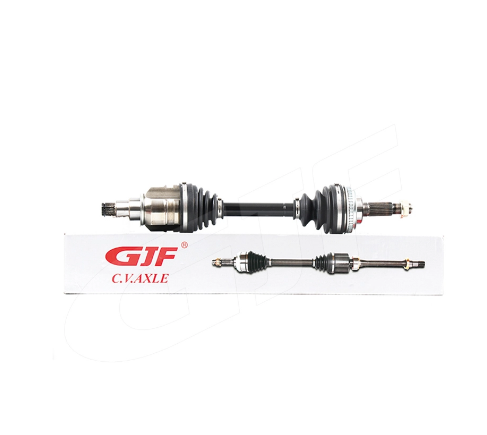
The Constant Velocity (CV) joint is a fundamental component in the drivetrain of virtually all modern front-wheel and all-wheel drive vehicles. Its primary mission is to transmit torque from the transaxle to the wheels at a constant speed, regardless of the suspension's movement or the steering angle. However, the CV axle assembly contains two distinct joints—an inner and an outer—each with a specialized role that is often misunderstood. This misinterpretation can lead to incorrect diagnoses, unnecessary parts replacement, and increased vehicle downtime. Understanding the critical distinction between the inner joint's role in suspension articulation and the outer joint's function in steering is paramount. This technical guide provides a clear framework for identifying specific failure points, understanding quality benchmarks, and optimizing procurement for long-term operational reliability.
The global automotive industry has long recognized Japan as a powerhouse of innovation, quality, and reliability. Japanese auto parts have earned a stellar reputation for their superior engineering and cutting-edge technology. From individual car enthusiasts to large-scale commercial enterprises, th
Understanding Aftermarket Auto PartsDefinition of Aftermarket Auto PartsAftermarket auto parts are components designed to replace original equipment manufacturer (OEM) parts that come with a vehicle. These parts are typically produced by third-party manufacturers and are designed to be compatible wi
Often hidden beneath the vehicle, the drive shaft is the unsung hero of the drivetrain. This critical component diligently transfers torque from the transmission to the wheels, making motion possible. Yet, for such a vital part, a significant debate exists around its construction material. Enthusiasts, racers, and even fleet managers frequently consider moving from the Original Equipment Manufacturer (OEM) steel shaft to an aftermarket aluminum alternative. This decision is not just about choosing a different metal; it's about altering the vehicle's performance characteristics, from acceleration to cabin noise.
In the complex world of automotive engineering, few components are as fundamental yet as frequently confused as the drive shaft and the axle. While both are critical for transmitting torque, their roles, designs, and failure symptoms are distinctly different. Misidentifying them can lead to incorrect repairs, wasted time, and compromised vehicle safety. The effective transfer of power from the engine to the wheels is the heart of a vehicle's performance, and understanding each link in this chain is essential for technicians, parts suppliers, and enthusiasts alike. This article provides a definitive technical and commercial framework to distinguish these components, empowering you to make informed decisions for repair, procurement, and design.
The Constant Velocity (CV) joint is a fundamental component in the drivetrain of virtually all modern front-wheel and all-wheel drive vehicles. Its primary mission is to transmit torque from the transaxle to the wheels at a constant speed, regardless of the suspension's movement or the steering angle. However, the CV axle assembly contains two distinct joints—an inner and an outer—each with a specialized role that is often misunderstood. This misinterpretation can lead to incorrect diagnoses, unnecessary parts replacement, and increased vehicle downtime. Understanding the critical distinction between the inner joint's role in suspension articulation and the outer joint's function in steering is paramount. This technical guide provides a clear framework for identifying specific failure points, understanding quality benchmarks, and optimizing procurement for long-term operational reliability.