Views: 0 Author: Site Editor Publish Time: 2026-04-14 Origin: Site
The Constant Velocity (CV) joint is a fundamental component in the drivetrain of virtually all modern front-wheel and all-wheel drive vehicles. Its primary mission is to transmit torque from the transaxle to the wheels at a constant speed, regardless of the suspension's movement or the steering angle. However, the CV axle assembly contains two distinct joints—an inner and an outer—each with a specialized role that is often misunderstood. This misinterpretation can lead to incorrect diagnoses, unnecessary parts replacement, and increased vehicle downtime. Understanding the critical distinction between the inner joint's role in suspension articulation and the outer joint's function in steering is paramount. This technical guide provides a clear framework for identifying specific failure points, understanding quality benchmarks, and optimizing procurement for long-term operational reliability.
Functional Roles: Outer CV joints facilitate steering angles, while inner CV joints accommodate suspension travel (plunging).
Diagnostic Cues: Clicking during turns typically indicates outer joint failure; vibration during acceleration points to the inner joint.
Procurement Priority: Material integrity (heat-treated steel) and boot seal quality are the primary drivers of Total Cost of Ownership (TCO).
Replacement Strategy: Evaluating the "Joint vs. Full Axle" replacement based on labor costs and vehicle age.
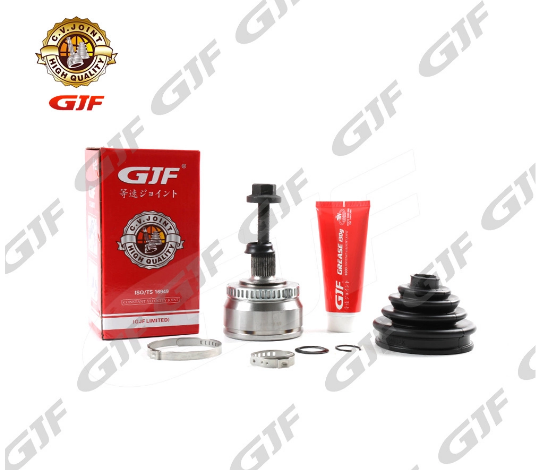
A CV axle is not a single, uniform part but a sophisticated assembly designed to solve a complex engineering problem: delivering uninterrupted power to a wheel that is constantly moving up, down, and side to side. At each end of the axle shaft sits a specialized CV Joint, and their designs are fundamentally different because their jobs are fundamentally different.
The Outer CV Joint connects the axle shaft to the wheel hub. Its single most important job is to allow for the extreme angles required for steering. It must continue transmitting full engine torque smoothly even when the front wheels are turned sharply, sometimes up to 45 or even 50 degrees. To achieve this, it typically uses a "Rzeppa-style" design, which features a series of ball bearings running in grooved tracks between an inner and outer race. This configuration allows for significant angularity while maintaining a constant rotational speed. It is considered a "fixed" joint because it does not have the ability to plunge or change its length.
The Inner CV Joint connects the axle shaft to the transmission or transaxle. Its primary function is to compensate for changes in the axle's effective length as the suspension compresses and rebounds. When you drive over a bump, the wheel moves upward, and the distance between the transaxle and the wheel hub shortens. This joint must be able to slide in and out—a movement known as "plunging"—to prevent the axle from binding. Common designs for this purpose include the Tripod joint, with three rollers on a trunnion, or the Double-Offset joint. These designs allow for significant axial movement with minimal friction, ensuring suspension can operate freely without interrupting power flow.
The inner and outer joints work in perfect tandem to create a seamless power transfer chain. Here is how the system functions:
Power flows from the transaxle into the inner CV joint.
The inner joint allows the entire axle assembly to move up and down with the suspension, plunging in and out as needed.
The solid axle shaft transfers this rotational force along its length.
The outer CV joint receives the torque and delivers it to the wheel hub, all while articulating at high angles as the driver steers the vehicle.
This coordinated effort ensures that you have smooth, reliable power delivery to the drive wheels under all driving conditions, from a sharp U-turn to hitting a pothole on the highway.
Because the inner and outer joints perform different tasks, they exhibit distinct symptoms when they begin to fail. A precise diagnosis saves time and prevents the replacement of healthy components. The key is to map the specific sound or sensation to the mechanical movement that causes it.
| Symptom Category | Outer CV Joint Indicators | Inner CV Joint Indicators |
|---|---|---|
| Audible Cues (Sound) | A loud, rhythmic clicking or popping noise that is most apparent during low-speed, sharp turns (e.g., in a parking lot). The sound is often more pronounced on one side when turning in that direction. | A "clunking" or "thudding" sound when shifting the vehicle from Drive to Reverse or vice versa. This is caused by excessive slack or play in the worn joint. |
| Tactile Cues (Feel) | Generally, a failing outer joint does not produce noticeable vibration during straight-line driving. Its symptoms are almost exclusively tied to steering angle. | A distinct shudder or side-to-side vibration felt through the floorboards and steering wheel, primarily during acceleration. The vibration often subsides when coasting. |
| Visual Cues (Wear) | Grease splatter found on the inside of the wheel, on the brake caliper, or along the suspension components. This is a clear sign of a torn or compromised CV boot. | While less common to see external grease splatter due to its more protected location, a failed inner boot can be detected during a physical inspection. Excessive play at the transaxle output is a key indicator. |
The classic sign of a failing outer joint is the unmistakable clicking sound during turns. This noise is produced by the worn ball bearings moving within pitted or damaged raceways inside the joint. As the steering angle increases, the pressure on these worn spots intensifies, causing the popping sound. Another critical indicator is visual evidence of a failed CV boot. The boot is a flexible rubber or thermoplastic shield that holds the essential grease in and keeps contaminants out. When it tears, the high-speed rotation of the axle slings the grease outward, creating a tell-tale mess and starving the joint of lubrication.
An inner CV joint failure manifests very differently. The most common symptom is a vibration under load. As the internal components (like the tripod rollers) wear, they develop excessive play. During acceleration, torque is applied, and this slack causes the axle to oscillate, creating a shudder that is often mistaken for a tire balance issue. However, unlike a tire problem, this vibration is directly related to throttle input. A clunk when changing direction (from forward to reverse) is another strong clue, indicating significant wear and lash within the plunging mechanism.
A hands-on inspection is the final step to confirm a diagnosis. When checking an axle:
Check for the right kind of play: A small amount of in-and-out movement (lateral play) is normal for the inner joint; this is its plunging function. However, any up-and-down or side-to-side movement (radial play) in either joint indicates excessive wear.
Assess boot integrity: Carefully inspect the boots for any signs of damage. Look for cracks from dry rot, tears, or loose clamps. Squeeze the boot gently; it should feel supple, not brittle.
Look for the "milky grease" indicator: If you find a torn boot, examine the exposed grease. If it appears milky, grey, or watery, it means water has contaminated the lubricant. This contamination drastically accelerates wear and guarantees the joint is damaged internally.
Not all aftermarket CV joints are created equal. The lifespan and reliability of a replacement joint are directly tied to its material science, manufacturing precision, and the quality of its supporting components. Understanding these engineering standards helps in sourcing parts that deliver long-term value instead of short-term fixes.
The core components of a CV joint—the cage, races, and ball bearings—are subjected to immense torsional and impact forces. Their durability starts with the choice of steel.
Material Specification: Premium joints are typically manufactured from high-carbon steel alloys like 55# (or AISI 1055) or Chromium steel (40Cr). These materials provide an excellent balance of toughness and hardness.
Heat Treatment: The raw material alone is not enough. The surfaces of the races and balls must undergo a precise induction hardening process. This creates a super-hardened outer layer (case) to resist wear, while the inner core remains slightly softer (and tougher) to absorb shock without fracturing. Insufficient hardening depth is a primary cause of premature failure, leading to pitting and galling on the contact surfaces.
The smooth operation of a CV joint depends on the flawless interaction of its internal parts. The channels in which the ball bearings ride, known as ball tracks or raceways, must be machined to extremely tight tolerances. Any imperfections, rough surfaces, or deviations from the specified geometry will create friction, generate excess heat, and cause binding during articulation. This precision ensures that torque is transferred smoothly and efficiently, minimizing wear and maximizing the joint's operational life.
Arguably the most common cause of CV joint failure is not the steel itself, but the failure of the boot that protects it. The boot and the grease it contains form a critical micro-environment.
Boot Material: Boots are generally made from Neoprene or Thermoplastic Elastomers (TPE). Neoprene is a durable synthetic rubber, but high-quality TPE often offers superior resistance to extreme temperatures, ozone, and physical abrasion, leading to a longer flex-fatigue life.
Grease Specification: The grease is not generic. It must be a high-temperature, high-pressure lubricant, typically fortified with Molybdenum Disulfide (MoS2). This additive provides a protective film that prevents metal-to-metal contact under the extreme pressure (EP) generated inside the joint, especially during sharp turns and heavy acceleration.
When a CV joint fails, the repair facility or vehicle owner faces a key decision: replace only the failed joint, or install a complete, new axle assembly? The right choice depends on a logical analysis of cost, risk, and vehicle condition.
Replacing only the failed Inner CV Joint or Outer CV Joint can be a cost-effective solution in certain scenarios. This approach is most viable when:
The vehicle has relatively low mileage, and the other joint and axle bar are confirmed to be in excellent condition.
The failure was clearly caused by a recently damaged boot, meaning the joint itself may not have suffered extensive wear.
You are preserving a high-quality Original Equipment (OE) axle shaft, which may be superior to some aftermarket shafts.
The primary benefit is a lower upfront part cost. However, this must be weighed against labor. Replacing a single joint is a more involved, time-consuming process than swapping a full axle, potentially increasing labor charges.
For most situations, especially on higher-mileage vehicles, replacing the entire axle assembly is the more prudent strategy. This approach offers several advantages:
Mitigating Risk: If one joint has failed due to age and wear, the other is likely nearing the end of its service life. A full axle replacement prevents a "cascading failure," where you fix the outer joint today only to have the inner joint fail six months later.
Simplifying Installation: Swapping a complete axle is faster and easier than disassembling, cleaning, and rebuilding one on the vehicle. This reduces labor costs and minimizes the chance of installation errors.
Reducing Comebacks: A new assembly comes with two new joints and two new boots, effectively resetting the wear clock and providing greater peace of mind for both the customer and the repair shop.
The ultimate decision should be driven by Total Cost of Ownership (TCO). While a single joint kit is cheaper, a complete premium axle assembly often provides better long-term value. The higher upfront cost is frequently offset by reduced labor time and the near elimination of risk for a repeat failure. Investing in a quality component minimizes the high costs associated with vehicle downtime and comeback repairs.
For repair shops, fleet managers, and distributors, selecting the right parts source is as important as the diagnosis itself. Evaluating a potential CV Joint Supplier should go beyond price and focus on indicators of quality, consistency, and reliability.
Look for suppliers who adhere to internationally recognized quality management systems. Certifications like IATF 16949 (the global automotive industry standard) and ISO 9001 demonstrate a commitment to process control, traceability, and continuous improvement. These are not just pieces of paper; they represent a disciplined manufacturing environment.
A reputable manufacturer will conduct rigorous testing to validate the performance and durability of their products. Key protocols to inquire about include:
Torsional Strength Testing: Measures the maximum torque the joint can withstand before failure.
Fatigue Life Cycle Analysis: Simulates thousands of miles of driving under various loads and angles to determine the joint's expected lifespan.
Environmental Testing: Includes procedures like ozone resistance tests for boots to prevent premature cracking and salt spray tests to ensure corrosion resistance of metal components.
Beyond the product itself, the supplier's business practices are critical. Consider these factors:
Inventory Depth: Does the supplier offer a wide range of applications covering Domestic, Asian, and European vehicles? This ensures you can source parts for all the vehicles you service.
Warranty Support: A strong warranty reflects the supplier's confidence in their product quality and provides a safety net against defects.
Technical Documentation: Access to clear installation guides, specifications, and technical support can be invaluable in ensuring a correct and efficient repair.
The inner and outer CV joints, while part of the same axle, are engineered for entirely separate mechanical challenges. The outer joint manages the dynamic angles of steering, while the inner joint absorbs the constant motion of the suspension. Recognizing their unique failure symptoms—clicking on turns for the outer, vibration on acceleration for the inner—is the foundation of an efficient and accurate repair. This diagnostic rigor prevents the unnecessary replacement of serviceable parts. Ultimately, whether choosing a single joint or a full axle, the decision should prioritize long-term reliability. Emphasize components built from superior materials and sourced from a supplier who can validate their quality, as this is the most effective strategy for minimizing total cost and maximizing vehicle uptime.
A: It is not recommended. A clicking CV joint is a sign of significant wear. While it may not fail immediately, continued driving increases the risk of the joint breaking apart completely. This can cause a total loss of power to that wheel and potentially lead to the axle shaft detaching, creating a serious safety hazard. It's best to have it inspected and repaired as soon as possible.
A: Outer CV joints typically fail more frequently for two main reasons. First, they operate at much more extreme angles due to steering, which creates more stress and wear. Second, their exposed position makes their protective boots more vulnerable to damage from road debris. The inner joint is more protected and articulates over a smaller range of motion, leading to a longer average lifespan.
A: Unlike brake pads, it is not a requirement to replace CV axles in pairs. You can replace only the failed side. However, on a high-mileage vehicle, it's often wise to consider that if one side has worn out, the other side may not be far behind. Replacing both at the same time can be a sound preventative maintenance strategy to avoid a future repair.
A: The lifespan of a high-quality CV joint can vary significantly but typically ranges from 80,000 to 120,000 miles or more. The most critical factor is the integrity of the CV boot. As long as the boot remains sealed and the joint is properly lubricated, the internal components can last for a very long time. Harsh driving conditions, torn boots, and poor-quality replacement parts will drastically shorten this lifespan.


