Views: 0 Author: Site Editor Publish Time: 2026-03-09 Origin: Site
You will likely pay between $180 and $400 for an inner CV joint replacement in 2026, according to the newest market information. The inner CV joint moves power from the engine to your wheels. It helps your car drive smoothly, even on bumpy roads. Fixing it on time is important for your safety and your car’s performance.
CV joints help your car stay smooth when you turn or go over bumps.
Checking your car often stops unsafe driving and big repair bills.
If you ignore repairs, other driveline parts can get damaged.
You can count on the GJF Inner CV Joint for a strong and dependable replacement.
You will likely pay $180 to $800 for an inner CV joint replacement in 2026. The price depends on your car and what repairs you need. Check your CV joints often for wear. Look for things like shaking or odd sounds. This helps you avoid big repair bills and keeps you safe. Pick good parts like the GJF Inner CV Joint. Good parts work better and last longer. They can help you save money over time. If your car has many miles or shows wear, think about changing the CV joint early. This can stop your car from breaking down without warning. Always get a full price estimate from your mechanic before repairs. This helps you avoid surprise costs.
You may wonder how much you will pay to replace an inner CV joint in 2026. Most drivers spend between $300 and $800 for each axle. This price includes both parts and labor. The cost for parts usually ranges from $150 to $400. Labor costs often fall between $150 and $300. The table below shows a simple breakdown:
Cost Component | Average Cost Range |
|---|---|
Total Cost | $300 - $800 per axle |
Parts Cost | $150 - $400 |
Labor Cost | $150 - $300 |
If you only need to replace the inner CV joint, you will likely pay on the lower end of this range. If you need a full axle replacement, the price can reach $900 to $1,200. You should always ask your mechanic for a detailed estimate before starting repairs.
Tip: Choosing a high-quality part like the GJF Inner CV Joint can help you avoid extra costs in the future. GJF offers OE fit, strong materials, and advanced features that make installation easier and last longer.
Many factors can change how much you pay for an inner CV joint replacement. Here are the main things to consider:
Vehicle Make and Model: Some cars use special parts that cost more. Larger vehicles or luxury brands often have higher prices.
Labor Rates: Shops in big cities usually charge more for labor. Smaller towns may offer lower rates.
Parts Quality: High-quality parts, like the GJF Inner CV Joint, may cost more at first. They often last longer and give you better performance.
Extent of Damage: If other parts of your axle or drivetrain need repair, your total cost will go up.
Warranty and Service: Some shops include a warranty with their work. This can add to the price but gives you peace of mind.
You should always choose parts that meet or exceed OE specifications. The GJF Inner CV Joint uses advanced engineering and strong CF53 steel. It also has special lubrication to reduce wear and noise. These features help your car run smoothly and keep repair costs down over time.
If you notice signs of a bad inner CV joint, do not wait. Early repairs can save you money and keep your car safe on the road.
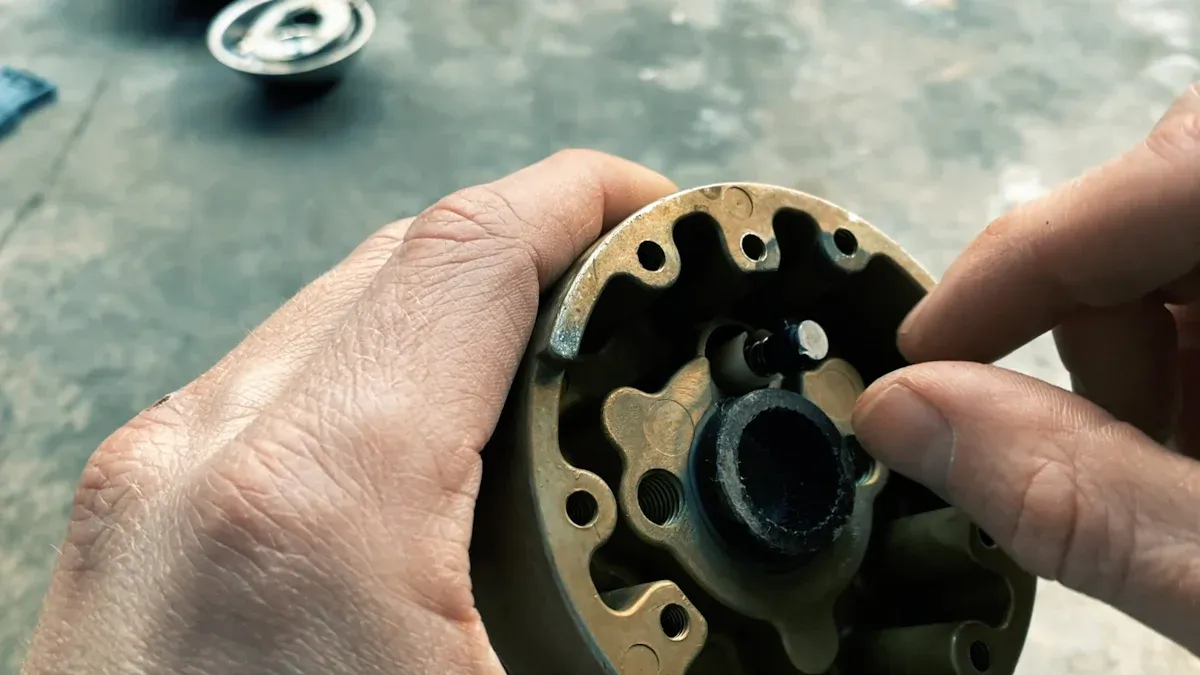
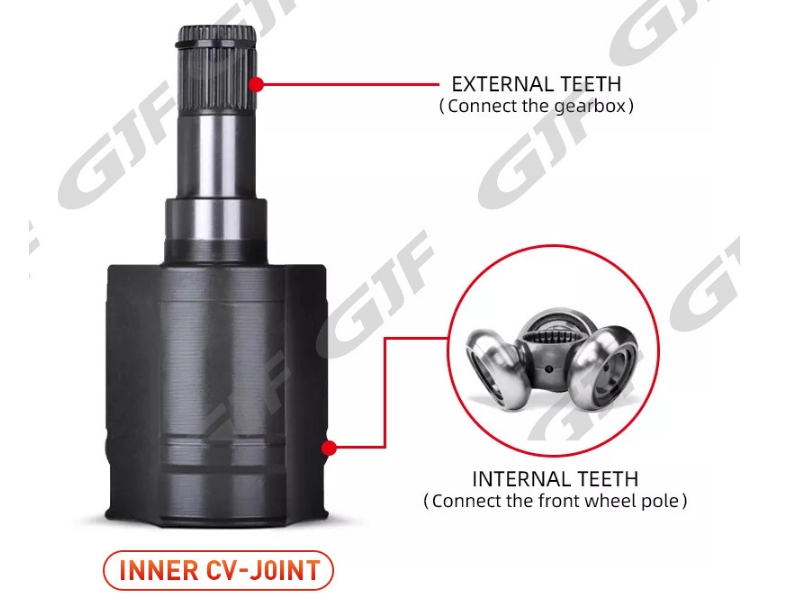
You depend on your car’s drivetrain to move power from the engine to the wheels. The inner CV joint sits at the end of the axle, close to the transmission. It lets the axle flex and move as your car goes over bumps or turns corners. This part helps your car drive smoothly, even when the road is rough. You feel less vibration and noise because the joint keeps the power steady.
The inner CV joint must handle a lot of force. It works hard every time you press the gas pedal. If this part fails, you may hear clicking sounds or feel shaking in your car. You might even lose control if the joint breaks while driving. That is why you should check it often and replace it when needed.
GJF designs its inner CV joints with strong CF53 steel. This material gives the joint extra strength and helps it last longer. GJF also uses advanced lubrication inside the joint. This special oil reduces friction and keeps the joint cool. You get a part that meets OE specifications, so it fits your car perfectly.
Note: A high-quality inner CV joint, like the one from GJF, can make your car safer and more reliable.
You will find two main types of CV joints on your car’s axle: inner and outer. The inner CV joint connects to the transmission. It handles up-and-down movement from the suspension. The outer CV joint connects to the wheel. It lets the wheel turn left and right when you steer.
Here is a quick comparison:
Feature | Inner CV Joint | Outer CV Joint |
|---|---|---|
Location | Near transmission | Near wheel |
Main Function | Handles suspension | Handles steering |
Common Symptoms | Vibration, shaking | Clicking when turning |
You need both joints for a smooth ride. If either one fails, your car will not drive well. Always choose parts that match your car’s needs.
You can spot problems with your Inner CV Joint by paying attention to how your car feels and sounds. Here are some warning signs you should look for:
Vibration while driving: You may feel shaking in the floor or seat, especially when you speed up.
Strange noises: Listen for clicking, clunking, or popping sounds when you turn or go over bumps.
Grease leaks: Check under your car for grease near the wheels or on the inside of the tire. This can mean the joint boot is torn.
Loss of power: Your car may not move as smoothly. You might notice it jerks or hesitates when you press the gas pedal.
Tip: If you notice any of these signs, you should check your car soon. Ignoring them can lead to bigger problems.
You can diagnose issues with your Inner CV Joint by using simple steps. Start by looking at the joint and the boot. If you see cracks or grease, the joint may be damaged. You can also listen for noises when you drive. Turn your steering wheel all the way to one side and drive slowly in a circle. If you hear clicking or clunking, the joint may be bad.
Use this table to help you check for problems:
Symptom | What to Check |
|---|---|
Vibration | Axle and joint condition |
Noise | Listen during turns |
Grease leak | Inspect boot for damage |
Jerking | Test acceleration |
You can ask a mechanic to inspect the joint if you are not sure. Mechanics use special tools to check for looseness or wear. Early diagnosis helps you avoid expensive repairs and keeps your car safe.
You put yourself and others at risk when you drive with a bad inner CV joint. The joint connects your transmission to your wheels. If it fails, you can lose control of your car. You may notice your steering feels loose or your car pulls to one side. These changes make it hard to keep your car straight, especially at higher speeds.
A worn CV joint can break without warning. When this happens, your car may stop moving even if the engine runs. You could get stranded in a dangerous spot, like the middle of an intersection or on a busy highway. In some cases, a broken joint can cause your wheel to lock up. This sudden stop can lead to accidents.
Alert: Never ignore strange noises, vibrations, or grease leaks. These signs warn you that your CV joint needs attention. Acting early keeps you safe.
Driving with a bad CV joint does more than threaten your safety. It can also damage other parts of your car. The joint helps your axle and wheels move smoothly. When it wears out, extra stress gets placed on the axle, transmission, and suspension.
Here are some problems you might face if you keep driving:
Axle damage: The axle can bend or break, leading to expensive repairs.
Transmission wear: Extra strain on the transmission can shorten its life.
Suspension issues: The suspension may wear out faster, causing rough rides.
Tire problems: Uneven power delivery can make your tires wear unevenly.
Risk | Possible Result |
|---|---|
Broken axle | Car will not move |
Damaged transmission | Costly repairs |
Worn suspension | Bumpy, unsafe ride |
Tire wear | Need for early replacement |
Tip: Fixing a bad CV joint right away saves you money and prevents bigger problems. You protect your car and your wallet by acting fast.
You can fix your car yourself or ask a mechanic for help. If you choose the DIY route, you need tools like a jack, socket set, and torque wrench. You must follow safety steps and use a repair manual. Most people spend three to five hours on this job. You save money, but you need skill and patience. If you do not feel confident, you should let a professional handle the repair. Mechanics finish the job faster and check for other problems. You pay more for labor, but you get peace of mind.
Tip: If you have never replaced an Inner CV Joint before, ask a mechanic for advice or watch a trusted video guide.
You pay for both parts and labor when you replace a CV joint. The table below shows how costs split:
Item | DIY Cost | Professional Cost |
|---|---|---|
Parts | $150-$400 | $150-$400 |
Labor | $0 | $150-$300 |
Tools | $50-$100 | $0 |
You spend less if you do the work yourself. You pay more if you go to a shop, but you do not need to buy tools. Always ask for a clear estimate before starting repairs.
You should pick parts that last and fit your car well. High-quality options, like the GJF Inner CV Joint, offer strong materials and advanced lubrication. These features help your car run smoothly and reduce noise. GJF designs its joints to match OE specifications, so you get a perfect fit and easy installation. You avoid extra repairs and enjoy a safer drive.
Note: Quality parts protect your car’s drivetrain and save you money over time.
Your vehicle type plays a big role in how much you pay for an inner CV joint replacement. Some cars use special parts that cost more. For example, luxury brands or sports cars often need unique joints. Trucks and SUVs may have larger, heavier-duty joints. These parts usually cost more than those for small sedans or compact cars.
You should check your owner’s manual or ask your mechanic about the right part for your car. If you drive a common model, you may find parts more easily and at a lower price. Rare or imported vehicles often need special orders, which can raise your costs.
Tip: Knowing your car’s make and model helps you plan for repair costs and avoid surprises.
Where you live affects how much you pay for labor. Big cities often have higher shop rates because of higher rent and wages. Smaller towns or rural areas may offer lower prices. Some shops charge a flat rate, while others bill by the hour.
Here is a quick look at how location can change your costs:
Location Type | Typical Labor Rate (per hour) |
|---|---|
Big City | $120 - $180 |
Suburban Area | $90 - $130 |
Small Town | $70 - $100 |
You can call a few shops in your area to compare prices. Always ask for a written estimate before you agree to any work.
The quality of the parts you choose makes a big difference in both cost and performance. High-quality inner CV joints, like the GJF Inner CV Joint, use strong CF53 steel and advanced lubrication. These features help the joint last longer and work better under stress.
Cheaper parts may save you money at first, but they can wear out faster. You might end up paying more for repairs in the long run. GJF Inner CV Joints meet OE specifications, so you get a perfect fit and easy installation.
Note: Investing in quality parts protects your car and can save you money over time.
You can keep your inner CV joint in good shape with a few simple habits. Check the rubber boot around the joint every month. Look for cracks or leaks. Clean off any dirt or grease you see. If you spot damage, fix it right away. Use a flashlight to see under your car. Listen for new noises when you drive. Pay attention to how your car feels on the road.
Here are some easy tips to follow:
Inspect the CV joint boot for tears or leaks.
Clean away dirt and grease from the axle area.
Listen for clicking or popping sounds.
Schedule regular checkups with your mechanic.
Tip: Early action helps you avoid bigger problems and saves you money.
You need a trustworthy mechanic for CV joint repairs. Start by asking friends or family for recommendations. Read online reviews to see what other drivers say. Visit the shop and ask questions about their experience with CV joints. Make sure the shop uses quality parts like the GJF Inner CV Joint.
Use this checklist when choosing a repair shop:
What to Ask | Why It Matters |
|---|---|
Do you use OE parts? | Ensures proper fit and safety |
Are repairs guaranteed? | Gives you peace of mind |
How long will it take? | Helps you plan your day |
Note: A good shop will explain the repair process and answer your questions.
You can replace your inner CV joint before it fails. This step keeps your car safe and avoids sudden breakdowns. Mechanics often suggest preventive replacement if your car has high mileage or if you drive in tough conditions. You should follow your car’s maintenance schedule. Choose a high-quality part like the GJF Inner CV Joint for the best results.
Replace the joint if you see wear or damage.
Do not wait for loud noises or shaking.
Use preventive replacement to protect your drivetrain.
Alert: Preventive care costs less than emergency repairs and keeps you on the road.
You keep your car safe and save money when you know about inner CV joint costs, signs of trouble, and ways to fix them. Picking a good part like the GJF Inner CV Joint helps your car last longer:
Feature | Benefit |
|---|---|
Triple Forged Strength | Makes the joint tough and stops it from wearing out quickly |
Premium Lubrication | Helps the joint work quietly and smoothly, even when it gets very hot |
Stable Power Delivery | Keeps your car running well on rough roads |
To make your drivetrain strong, do these things:
Check CV joints every 6,000 to 10,000 miles.
Change broken boots as soon as you see them.
Drive carefully and do not speed or turn hard.
Put grease on joints that can be serviced, as your manual says.
If you hear clicking or popping, fix the problem right away. Quick repairs stop bigger issues, can save you up to $1,000, and keep your car safe.
You should inspect your inner CV joint every 6,000 to 10,000 miles. Look for signs of wear, noise, or grease leaks. Early checks help you prevent bigger problems.
You should not drive with a damaged inner CV joint. The risk of losing control increases. You may cause more damage to your car. Get repairs as soon as possible.
GJF Inner CV Joint uses CF53 steel and advanced lubrication. You get OE fit, easy installation, and strong durability. These features help your car run smoothly and last longer.
A mechanic usually finishes the job in two to four hours. If you do it yourself, you may need more time. You should plan for extra time if you are new to repairs.
Ignoring symptoms leads to expensive repairs. You may damage your axle, transmission, or suspension. You risk unsafe driving and sudden breakdowns. Fix problems early to stay safe.


